



History and Heritage
The churches of Goa stand as enduring symbols of the region’s Portuguese legacy, reflecting over 450 years of shared history. Introduced in the early 16th century, Christianity became deeply embedded in Goan life, shaping not only religious practice but also architecture, art, music, and community traditions.
Old Goa emerged as a major religious centre during Portuguese rule, often referred to as the “Rome of the East.” Over time, churches were established not only in Old Goa but across Panjim, Margao, and surrounding villages—each serving as both spiritual and social anchors for local communities.
These churches are not museums; they remain living places of worship, continuing traditions that have been passed down through generations.
Architecture & Design


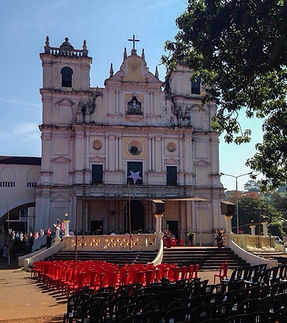
Goan church architecture reflects European styles adapted to a tropical setting. Influences include Baroque, Manueline, Renaissance, and Neo-Classical traditions, interpreted with local materials and craftsmanship.
Common features include:
-
Whitewashed façades and symmetrical layouts
-
Ornate gilded altars and carved woodwork
-
High vaulted ceilings and arched windows
-
Bell towers, grand staircases, and hilltop settings
Together, these elements create spaces that feel both grand and serene, expressive yet restrained.

Visiting with Respect
These churches are active places of worship. Visitors are encouraged to dress modestly, maintain silence inside, and experience them with respect for local customs and faith.